Why Manual Screen Changers Are Ideal for Film Blowing Processes
The key reasons why manual screen changers are particularly well-suited for film blowing lie in their simple structure, low cost, fast screen change, reliable sealing, and compact footprint. These features perfectly align with the operating conditions of small and medium-sized film blowing lines, which typically involve “clean materials, medium to low pressure, frequent screen changes, and budget constraints.”
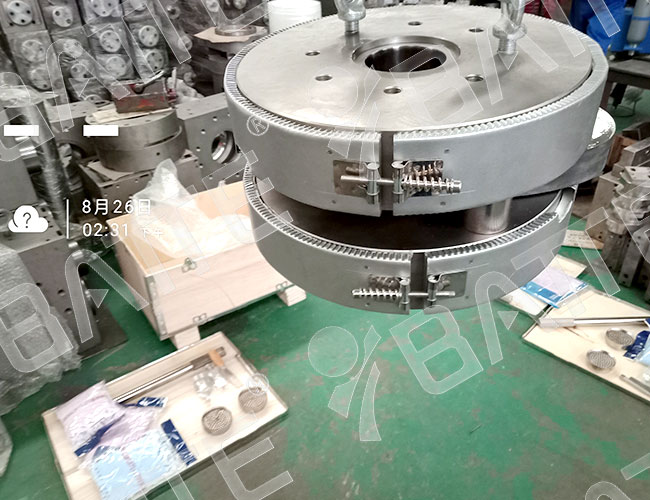
I. Extremely Simple Structure, Suited for Film Blowing Conditions
No electricity or hydraulics: A purely mechanical dual-station slide plate with an extremely low failure rate and a service life of up to 8–10 years.
Compact and easy to install: Installs directly between the extruder and the die head without requiring line modifications, making it ideal for small and medium-sized blown film lines with limited workshop space.
Polished flow channels: Mirror-polished internal flow channels minimize melt retention and degradation, preventing crystal spots and black lines on the film surface.
II. Fast Screen Change with Minimal Impact on the Film Blow
Dual-station switching: One station filters while the other stands by; screen changes can be performed during deceleration or brief shutdowns, taking 15–20 seconds for a skilled operator.
Minimal pressure fluctuations: Pressure rises gradually during screen changes, resulting in minimal fluctuations in film bubble thickness, high stability, and low scrap rates.
Mesh precision matching: Commonly uses 80–150 mesh to precisely filter out small- and medium-molecular-weight PE/PP impurities, meeting the cleanliness requirements of film blowing.
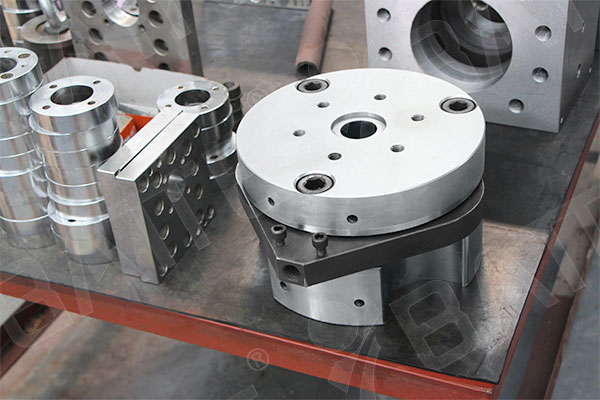
III. Reliable Sealing, Suitable for Film Blowing Temperatures and Pressures
Flexible compensating seal: Withstands high temperatures (≤300°C) and medium pressure (≤35 MPa); no leakage during screen changes, with no material overflow or smoke.
Beveled self-locking mechanism: Automatically locks after switching, ensuring stable sealing during long-term operation and preventing film surface contamination.
IV. High Cost-Effectiveness and Simple Maintenance
Low cost: Approximately 1/3–1/5 the price of hydraulic screen changers, suitable for the budgets of small and medium-sized factories.
Low maintenance: Requires only periodic replacement of filter screens and O-rings; maintenance costs account for approximately 10%–15% of the equipment price.
High Versatility: Compatible with mainstream film-blowing raw materials such as PE, PP, LLDPE, and HDPE, offering multi-purpose functionality.
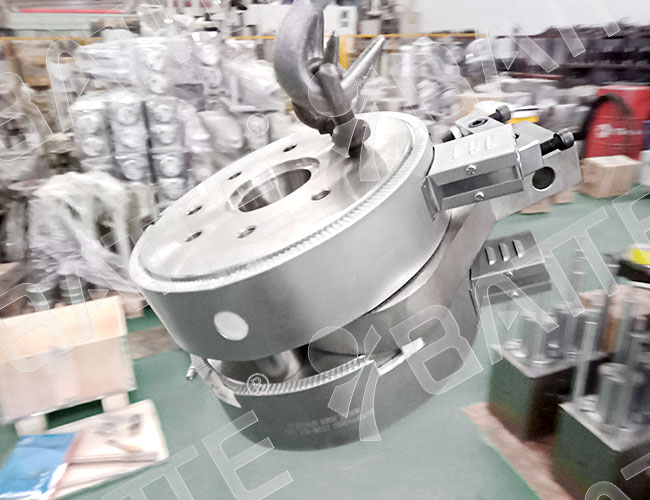
V. Recommended Applications (Best Suited for Film Blowing)
Small to medium-sized lines: Daily output **≤3 tons**, production capacity **≤500 kg/h**.
Primarily clean virgin materials: PP/PE/ABS, etc., with **≤2–3** screen changes per shift.
General packaging film, agricultural film: Requires surface quality but not at the highest level.
Not suitable for: Heavy-duty recycled materials, frequent screen changes (>5 times per shift), large-scale lines (>10 tons/day), high-speed continuous lines such as BOPP.
With its four key advantages—simplicity, reliability, low cost, and quick screen changes—the manual screen changer precisely meets the process requirements of small and medium-sized film blowing lines, making it the preferred filtration solution for standard film blowing applications.
Email: sale@meltpump.com
WhatsApp: +86 158 3833 1071