Why Are Screen Changers Indispensable in Extrusion Lines?
In the extrusion production of polymer materials such as plastics and rubber, screen changers have evolved from “optional accessories” to “core essentials.” Their irreplaceable nature stems from their systematic resolution of three major pain points in the industry.
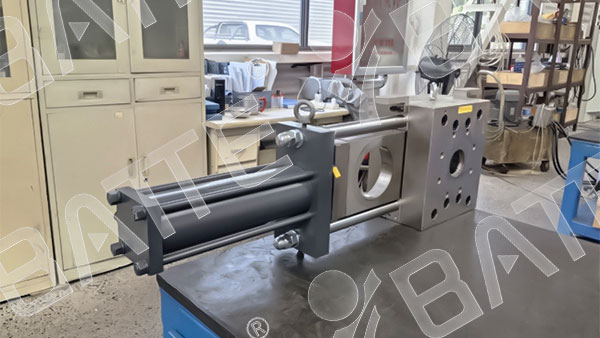
I. Core Industry Pain Points
Contamination-induced quality crises: During storage, transportation, and processing, raw materials are prone to contamination by impurities such as metal shavings, sand, and degraded pellets. These impurities can cause pinholes, fractures, and surface blemishes in finished products, or even clog molds. In high-end sectors such as food packaging and medical tubing, such defects directly result in product scrapping.
Massive Waste from Downtime for Screen Changes: Traditional manual screen changes require stopping the machine and disassembly. Restarting after the melt has cooled and solidified generates significant waste. For long-process production lines (such as pipe and film manufacturing), a single shutdown may result in the scrapping of several meters of finished product, and frequent starts and stops severely reduce production efficiency.
Process fluctuations affect stability: Uneven melt plasticization and pressure fluctuations can cause defects such as thickness variations and weld lines in the finished products. At the same time, the scouring action of impurities accelerates wear on the screw and mold, increasing equipment maintenance costs.
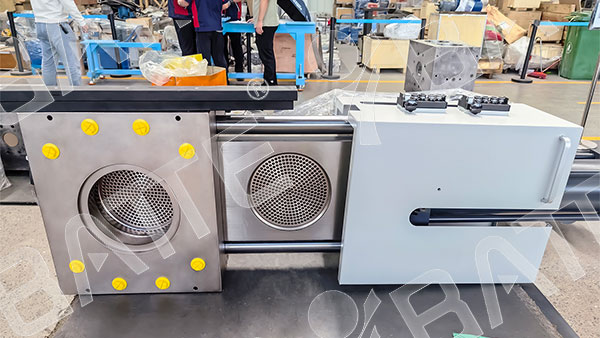
II. Working Principle of Screen Changers
The core function of a screen changer is to achieve online melt filtration through screen switching. Mainstream dual-column, dual-station screen changers employ a dual-channel, dual-screen structure: during operation, both stations filter simultaneously; during screen changes, one station traps impurities while the other undergoes screen replacement, enabling continuous production without shutdown. More advanced rotary filters (Barte’s new screen changer) utilize a small-angle rotation of the annular filter screen for replacement, combined with a high-pressure backflush system. A single filter screen can be reused up to 400 times, further reducing operating costs.
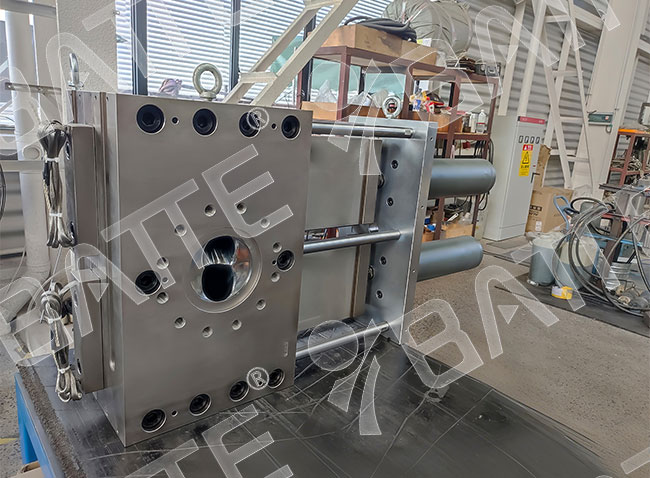
III. Systemic Solutions
Source-Level Quality Control: Through multi-layer filtration using high-precision screens ranging from 20 to 400 mesh, the system not only intercepts solid impurities but also adsorbs gel-like substances, cutting off the path for defects at the source and improving the surface finish of the finished product by over 30%.
Stable Process: The backpressure generated by the screen changer improves melt plasticization uniformity and promotes additive dispersion. At the same time, the stable flow field eliminates “wrap marks” and “weld lines,” enhancing the product’s mechanical properties and dimensional stability.
Cost Reduction and Efficiency Improvement: The fully automatic, non-stop screen changer increases the production line’s effective operating time to over 95%, reducing scrap and energy consumption. Intercepting impurities also reduces equipment wear, extending the service life of screws and molds by 2–3 years and lowering maintenance costs by 30%.
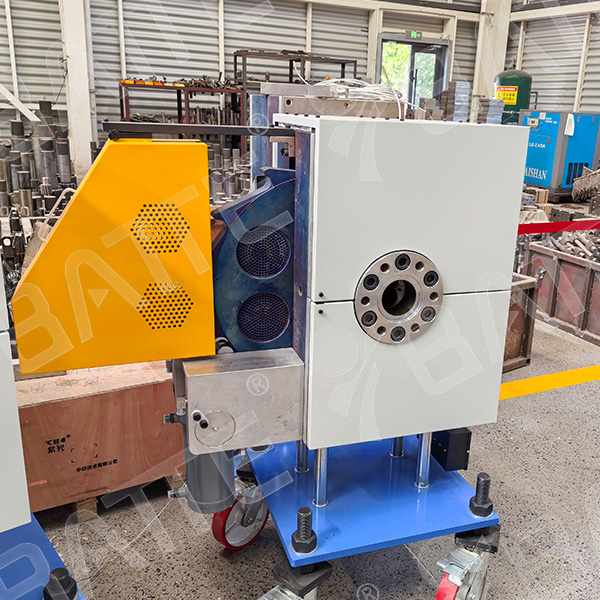
Through the technological evolution from manual to fully automatic systems, the screen changer has become a critical component for ensuring the quality, efficiency, and cost control of extrusion production lines, and is essential equipment for the precision processing of polymer materials.
Email: sale@meltpump.com
WhatsApp: +86 158 3833 1071