Working Principle of Dual-Plate Hydraulic Screen Changer
The dual-plate hydraulic screen changer serves as a core non-stop filtration device for the plastic extrusion industry, widely compatible with various plastic extrusion production lines. Its core value lies in enabling non-stop continuous screen changing operations, significantly enhancing production continuity, efficiency, and finished product quality stability. Below is a detailed explanation of its working principle and operational process.
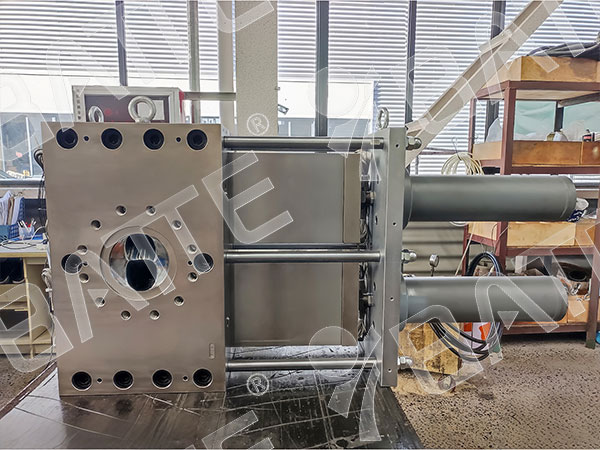
I. Core Structure and Normal Operating Principle
The core assembly of the dual-plate hydraulic screen changer consists of two parallel hydraulic-driven sliding plates. Each plate incorporates an independent circular filtration station equipped with dedicated filter screen assemblies.
During normal production, high-temperature molten material enters the main flow channel through the changer's inlet. It is evenly distributed into two parallel filtration channels, passing through the filter screens in both slide plate stations to remove impurities. The filtered clean melt converges again in the internal convergence chamber of the changer before being stably delivered to the downstream mold through the outlet. This dual-station simultaneous online filtration mode ensures continuous production and high filtration efficiency throughout the process.
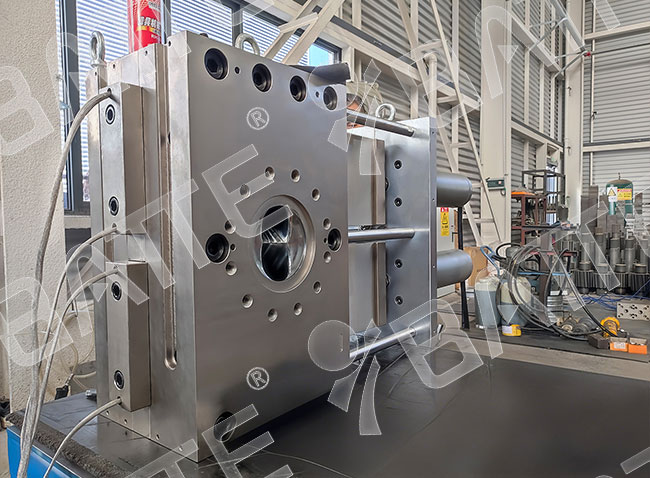
II. Screen Change Warning and Pre-Preparation
As filtration continues, accumulated impurities intercepted by the screens cause sustained pressure buildup within the flow channels. When system pressure reaches a preset threshold, the integrated pressure monitoring alarm triggers a screen change warning, prompting operators to execute the screen replacement procedure.
Prior to screen replacement, operators must prepare a new, compatible filter screen assembly and confirm the hydraulic power unit is in normal standby mode and capable of stable operation.
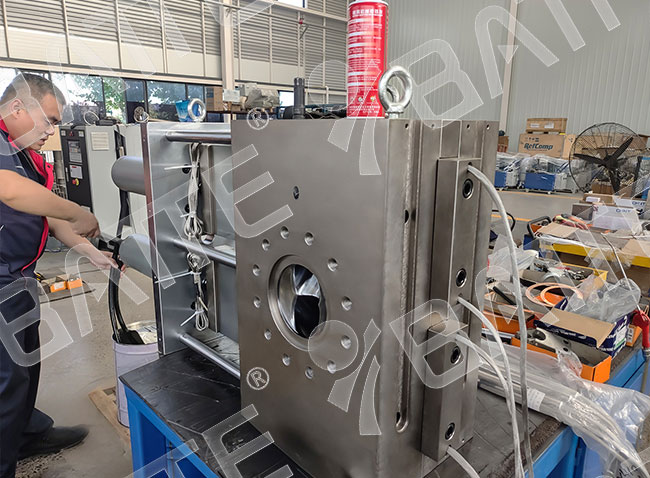
III. Screen Replacement Procedure
The entire screen replacement process employs an alternating dual-station switching mode, requiring no production downtime. The specific procedure is as follows:
Single-Station Offline Switching: Activate the hydraulic power unit and operate the corresponding handle/button of the hydraulic control system to drive one set of slides in linear motion. This smoothly withdraws the filtration station of that slide from the main chamber of the screen changer. During this process, the filtration station of the other slide maintains full-flow online filtration, requiring no production line shutdown or speed reduction.
Filter Cleaning and Replacement: Once the target filtration station is fully withdrawn from the main body, shut down the hydraulic station. Thoroughly clean the contaminated filter and residual impurities from this station, then install a new filter assembly.
Station Reset and Reactivation: After filter replacement, restart the hydraulic station. Operate the corresponding control button to smoothly retract the replaced slide plate back into the main chamber. This station is reconnected to the production flow channel and resumes online filtration.
Alternate Station Replacement: Repeat steps 1-3 to complete filter screen replacement for the other sliding plate station. Once both stations are replaced, the equipment resumes normal operation with simultaneous dual-station filtration.
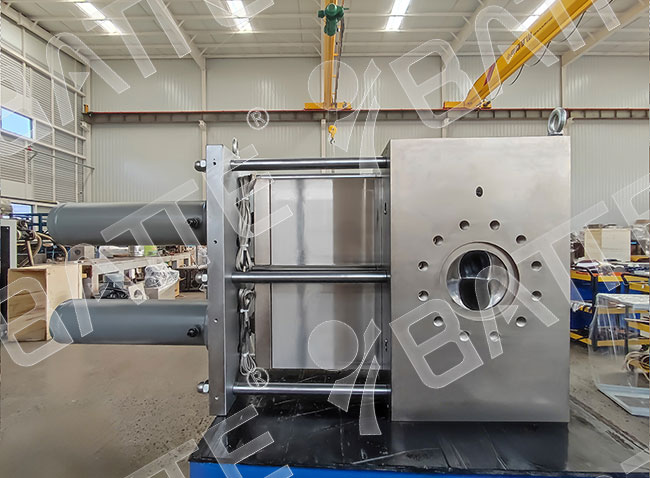
In summary, the dual-plate hydraulic screen changer achieves efficient, continuous, and low-loss filtration and screen changing operations through its dual-plate parallel dual-station design and rapid hydraulic switching capability. It serves as a core supporting equipment for enhancing production efficiency and stabilizing product quality in the plastic extrusion industry.
Email: sale@meltpump.com
WhatsApp: +86 158 3833 1071